How to Teach a Dog to Sit: A Complete Guide to Mastering Basic Obedience Through Positive Reinforcement and Reward-Based Training

Teaching your dog to sit is the cornerstone of all obedience training and one of the most practical commands you'll ever need. Whether you're working with an energetic puppy or an older dog, the sit command establishes clear communication, builds trust, and gives you a reliable way to manage your dog's behaviour in everyday situations. The sit command helps prevent jumping, encourages impulse control, and creates a foundation for more advanced training whilst keeping your dog safe at curbs, doorways, and during greetings.
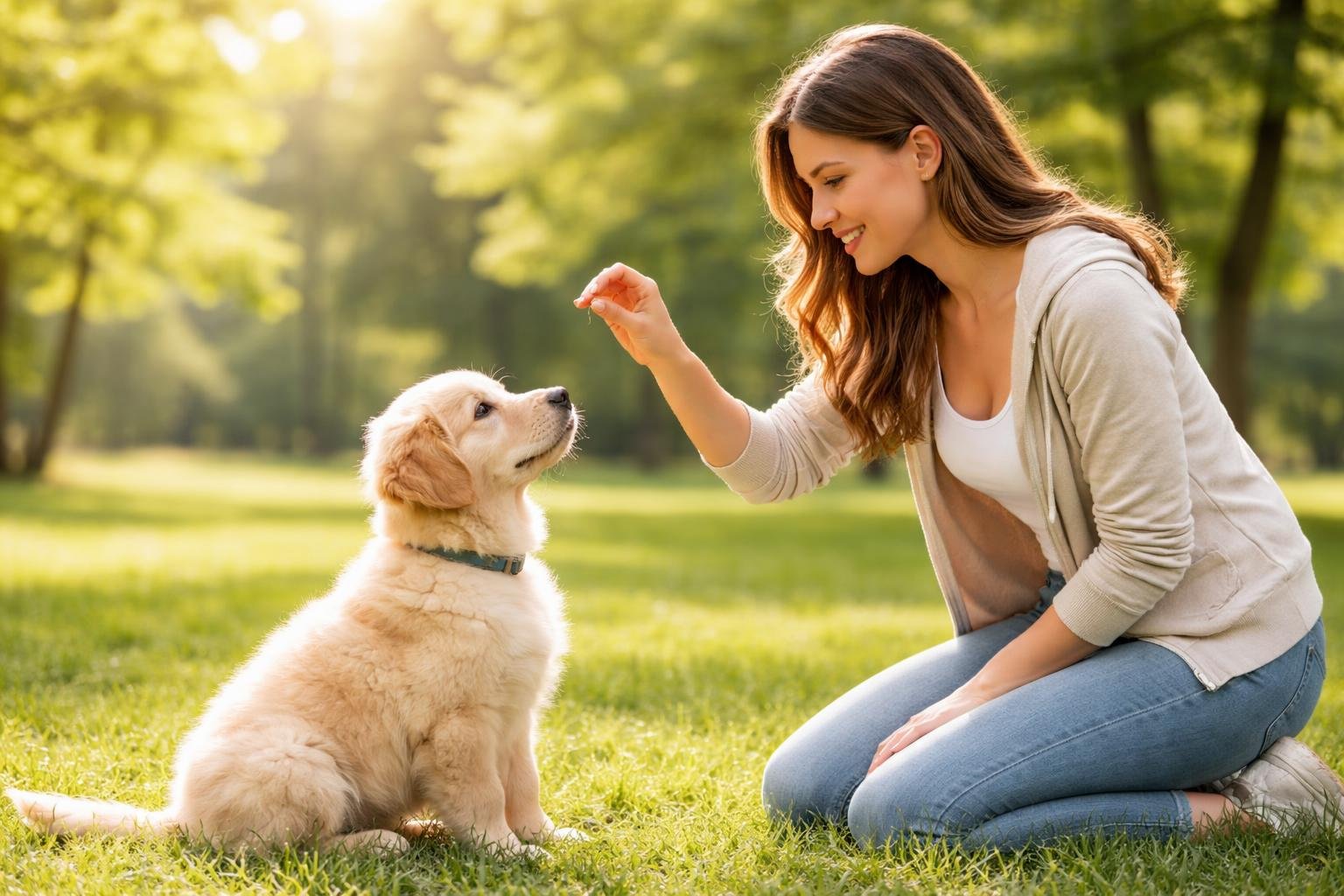
The good news is that teaching sit doesn't require professional equipment or years of experience. Using positive reinforcement methods like lure and reward training, most dogs can learn this command within just a few short sessions. You'll need high-value treats, patience, and consistency to shape this behaviour effectively.
This guide walks you through everything from your first training session to proofing the command in distracting environments. You'll learn how to use verbal cues, hand signals, and proper reward timing to achieve a fast, reliable sit that works whether you're at home or out in public.
Key Takeaways
- Teaching sit using positive reinforcement establishes trust and communication whilst providing essential impulse control for your dog
- Most dogs can learn to sit within a few sessions using lure and reward methods with high-value treats and consistent practice
- Gradually generalising the sit command across different environments and distractions ensures your dog responds reliably in real-world situations
Why Teaching 'Sit' Is Essential For Your Dog
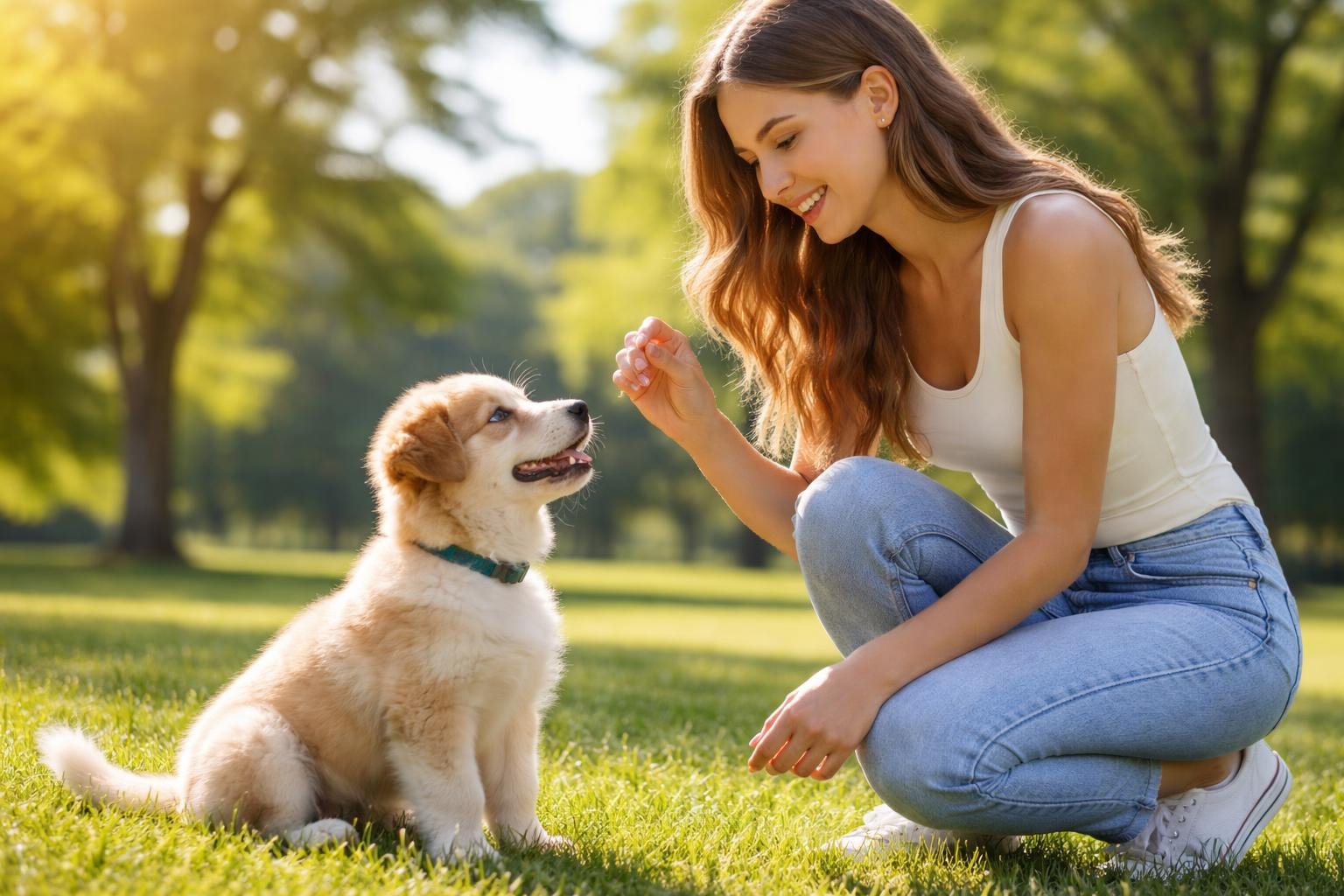
The sit command serves as the cornerstone of effective dog training, offering practical benefits that extend far beyond basic obedience. It provides safety, impulse control, and a communication framework that strengthens your relationship with your dog.
The Benefits Of The Sit Command
Teaching your dog to sit gives you a reliable tool to manage their behaviour in everyday situations. When your dog knows how to sit on command, you can prevent jumping on guests, stop them from bolting through doorways, and keep them calm whilst you prepare their meals.
The sit command also enhances safety during walks. You can ask your dog to sit at curbs before crossing streets, preventing them from rushing into traffic. This simple command becomes a default behaviour that helps your dog settle down when they're excited or overstimulated.
Beyond practical applications, the sit command builds focus and engagement. Dogs learn to look to you for guidance rather than acting on impulse. This foundational skill makes it easier to teach more advanced commands like stay, down, and recall.
Foundation For Obedience And Good Manners
The sit command establishes a pattern of learning that your dog will carry forward into all future training. When you successfully teach sit using positive reinforcement, your dog learns that responding to your cues leads to rewards. This understanding makes subsequent commands easier to introduce.
Sit also helps develop impulse control, which is crucial for good manners. A dog who has mastered sitting can resist the urge to jump, lunge, or rush forward. You're essentially teaching your dog to pause and think before acting, which translates to better behaviour across various contexts.
This command strengthens communication between you and your dog. Through consistent training, your dog learns to pay attention to both verbal cues and hand signals, creating a shared language that deepens your bond.
When To Start Teaching Sit
You can begin teaching sit as soon as you bring your puppy home, typically around eight weeks old. Puppies have short attention spans, so keep initial sessions brief—just two to three minutes at a time. Young dogs learn quickly when training is presented as an engaging game rather than a formal lesson.
Older dogs can absolutely learn to sit, regardless of their age. The process remains the same, though senior dogs or those with joint issues may need modifications. Ensure they're working on a non-slip surface and consider their physical comfort when asking them to hold the position.
Start training in a quiet, low-distraction environment where your dog can focus entirely on you. Once they've mastered sit in this controlled space, gradually introduce the command in different locations and situations to help them generalise the behaviour.
Step-By-Step Guide: How To Teach Your Dog To Sit
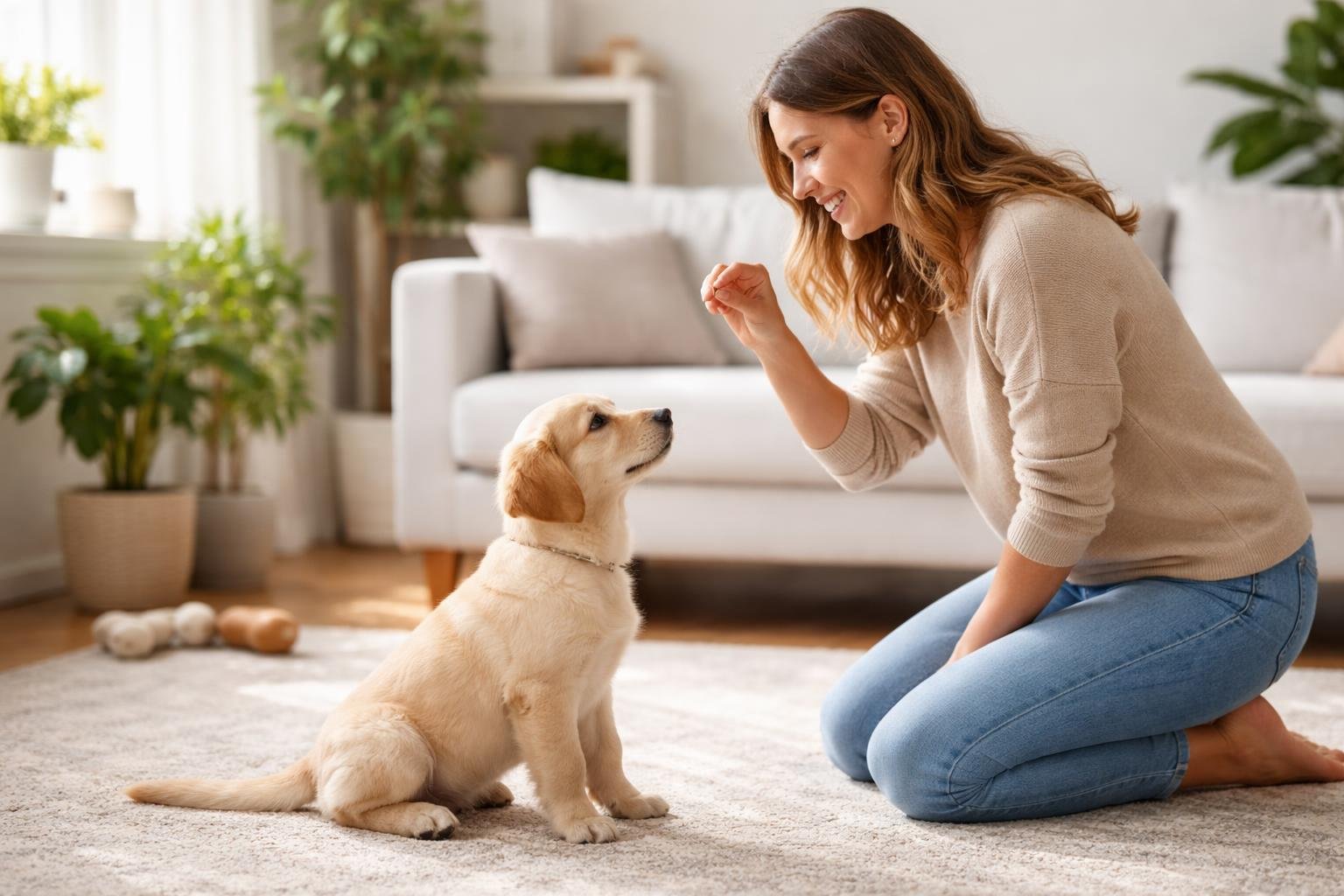
Teaching the sit command requires a structured approach that combines environmental setup, reward-based techniques, clear communication signals, and consistent positive feedback. Each element builds upon the previous one to create a solid foundation for your dog's obedience training.
Setting Up The Perfect Training Environment
Choose a quiet space in your home where your dog can focus entirely on you. Remove toys, turn off the television, and ensure other pets or family members won't interrupt the session.
A non-slip surface works best for training sessions. Carpeted areas or rubber mats prevent your dog from sliding, which is particularly important for puppies still developing coordination or senior dogs with joint concerns.
Essential items to gather:
- High-value treats (small, soft pieces)
- Training pouch or pocket-accessible container
- Comfortable clothing without loose sleeves
- Optional clicker if using marker training
Keep your initial sessions brief, around 3-5 minutes maximum. Puppies have limited attention spans, and even adult dogs learn better through short, focused intervals rather than lengthy practice periods.
Select treats your dog finds irresistible but can eat quickly. Tiny pieces of cooked chicken, cheese, or commercial training treats allow for rapid repetition without filling up your dog too quickly.
Using The Lure And Reward Method
Hold a treat between your thumb and forefinger, positioning it just above your dog's nose. Move the treat slowly backwards over their head, creating a natural arc that encourages their bottom to lower towards the ground.
The moment your dog's rear touches the floor, release the treat and offer verbal praise. Timing is critical here—reward within one second of the desired behaviour to create a clear connection.
Common luring mistakes to avoid:
- Holding the treat too high (causes jumping)
- Moving too quickly (confuses the dog)
- Repeating the command multiple times
- Pulling the treat away before rewarding
If your dog backs up instead of sitting, practise near a wall or corner. This gentle barrier helps guide them into the sitting position without feeling trapped or pressured.
Repeat this process 5-8 times per session, then take a break. Dogs absorb information during rest periods between training, so spacing out your practice yields better results than marathon sessions.
Once your dog consistently follows the lure into a sit, begin fading it out. Start using an empty hand with the same motion whilst holding treats in your other hand, gradually transitioning from lure to hand signal.
Introducing Hand Signals And Verbal Cues
Add your verbal cue only after your dog reliably follows the hand motion. Say "sit" in a clear, upbeat tone just before you make the hand gesture, creating an audio-visual pairing.
Your hand signal should be distinct and consistent. Most trainers use a flat palm moved upwards from waist to chest height, though the specific motion matters less than maintaining uniformity.
Effective cue implementation:
- Say "sit" once
- Wait 1-2 seconds
- Give hand signal
- Reward the completed behaviour
Never repeat commands multiple times during learning phases. If your dog doesn't respond, they haven't fully grasped the concept yet and need more practice with the lure method.
Practise verbal cues separately from hand signals once both are established. This teaches your dog to respond to either communication method independently, increasing reliability in various situations.
Positive Reinforcement And Marker Training
Marker training uses a specific sound—either a clicker or a word like "yes"—to pinpoint the exact moment your dog performs correctly. This precise feedback accelerates learning significantly compared to praise alone.
If using a clicker, press it the instant your dog's bottom hits the ground, then immediately deliver the treat. The click becomes a promise that a reward is coming, creating powerful associations.
Your marker word must be short, sharp, and used exclusively for training. "Yes" works well, though some trainers prefer "good" or even unique sounds. Whatever you choose, maintain absolute consistency.
Reward hierarchy for dog training:
| Reward Level | Examples | When to Use |
|---|---|---|
| High-value | Chicken, cheese, liver treats | New behaviours, distractions |
| Medium-value | Commercial training treats | Regular practice sessions |
| Low-value | Kibble, basic biscuits | Well-established commands |
Gradually reduce treat frequency as your dog masters the sit command, transitioning to intermittent reinforcement. Reward every third sit, then every fifth, maintaining unpredictability that actually strengthens the behaviour.
Verbal praise should accompany every reward, even after you've phased out continuous treating. Your enthusiasm and attention remain valuable motivators that don't require food to be effective.
Advancing Sit Training: Beyond The Basics
Once your dog reliably sits on cue in familiar settings, the real work begins with removing food lures, building consistency across different locations, and developing impulse control that translates to real-world situations.
Fading The Lure And Building Consistency
The transition from lure-based training to verbal or hand signals alone is crucial for long-term success. Start by making your treat movements smaller and less obvious whilst still rewarding your dog when they sit. Within a few sessions, you should be able to give just a slight upward hand motion without holding food.
Next, alternate between sessions where you show the treat and sessions where it remains hidden in your pocket or training pouch. Your dog learns that the reward still comes even when they can't see it initially. This builds trust in the command itself rather than dependence on visible food.
Progressive lure fading steps:
- Reduce lure motion by 25% every 2-3 sessions
- Keep treats in your closed hand, then gradually empty it
- Maintain the same hand signal shape without food present
- Reward from your opposite hand or pocket after the sit
Consistency means your dog responds to the first cue without repeated commands. If you find yourself saying "sit, sit, sit," you've accidentally taught your dog that three repetitions equal one command. Wait patiently after giving the cue once, and only reward immediate responses.
Generalising The Sit Command In Different Environments
Dogs don't automatically understand that "sit" in your kitchen means the same thing at the park. Each new environment requires practice because dogs learn contextually. Begin generalising in low-distraction areas before progressing to busier settings.
Start with different rooms in your home, then move to your garden, quiet streets, and eventually locations with more activity. In each new place, temporarily reintroduce your hand signal alongside the verbal cue to set your dog up for success. You're not starting over—you're simply helping them connect the dots.
Environment progression for generalisation:
| Stage | Location | Typical Challenges |
|---|---|---|
| 1 | Different rooms at home | Minimal distractions |
| 2 | Garden or quiet outdoor space | Natural smells, sounds |
| 3 | Quiet street or car park | New surfaces, mild distractions |
| 4 | Park edge or quiet path | Other dogs visible at distance |
| 5 | Busier public spaces | Multiple stimuli, movement |
When your dog struggles in a new environment, take three steps back in difficulty. Use higher-value treats and reduce your distance expectations. Success in varied contexts builds a truly reliable sit command.
Sit-Stay And Impulse Control Exercises
Teaching your dog to maintain a sit until released transforms a simple position into a powerful impulse control tool. Start with duration before adding distance or distractions. Ask your dog to sit, pause for just two seconds, then release them with a word like "okay" or "free" before rewarding.
Gradually increase the time in small increments—three seconds, then five, then eight. If your dog breaks the sit, simply reset without punishment and reduce the duration slightly. You're building their ability to resist the impulse to move.
Once your dog holds a sit for 20-30 seconds consistently, introduce distance. Step backwards one pace whilst they remain sitting, return immediately, and reward. Add one step at a time as they succeed.
Practical impulse control applications include sitting at doorways before going outside, sitting before their food bowl is placed down, and sitting when greeting visitors instead of jumping. These real-world uses reinforce that patience and calmness earn rewards.
Troubleshooting Common Training Challenges
If your dog won't sit consistently, assess whether the issue is understanding, motivation, or distraction. A dog who sits perfectly at home but ignores you outside likely understands the command but finds the environment too stimulating. Return to easier settings and build up gradually.
Common problems and solutions:
Slow or delayed sits: Only reward the fastest 75% of responses. Your dog will quickly learn that speed matters. Ignore slow attempts and try again after a brief pause.
Sitting then immediately standing: This often means you're rewarding too late. Mark the exact moment their bottom touches the ground with a word like "yes" or a clicker, then deliver the treat. Your timing shapes the behaviour.
Physical limitations: Older dogs or those with joint issues may struggle with repeated sits. Consult your vet and consider alternatives like teaching "settle" on a mat for dogs with arthritis or hip dysplasia. Use non-slip surfaces to give them confidence.
Distraction-based refusal: You've likely progressed too quickly through environments. High-value treats like chicken or cheese often overcome moderate distractions when standard biscuits fail. Keep training sessions short—five minutes of focused work beats fifteen minutes of frustration.
Puppy And Senior Dog Considerations
Training a dog to sit requires different approaches depending on their age, with puppies needing shorter sessions and senior dogs requiring joint-friendly modifications. Both age groups benefit from patience and positive reinforcement, though the pace and physical demands must be adjusted accordingly.
Puppy Training Fundamentals
Puppies can begin learning to sit as early as 8 weeks old, though their attention spans rarely exceed 5 minutes per session. Their developing brains absorb information quickly, but they also tire and lose focus faster than adult dogs.
Schedule 3-5 training sessions daily, keeping each one brief and energetic. Puppies respond best to high-value treats like small pieces of chicken or cheese, as their motivation systems are still forming. Use treats no larger than a pea to prevent overfeeding.
Essential puppy considerations:
- Train before mealtimes when hunger increases motivation
- Practise on non-slip surfaces to prevent sliding
- Expect accidents and loss of position during early sessions
- Celebrate every small success with enthusiastic praise
Puppies often pop back up immediately after sitting. This is normal behaviour, not defiance. Simply wait a second before marking and rewarding the sit, gradually extending the duration as your puppy matures.
Joint-Friendly Training For Older Dogs
Senior dogs and those with arthritis need modifications to protect their joints whilst learning. Never lure an older dog's head too far back, as this can strain their neck and spine.
Instead of deep sits, accept whatever position your dog can comfortably achieve. A partial sit or hover is perfectly acceptable for dogs with hip dysplasia or other mobility issues. Place a cushioned mat or folded blanket beneath them for added comfort during training.
Watch for these signs of discomfort:
- Hesitation before sitting
- Immediately standing back up
- Whining or vocalising
- Shifting weight repeatedly
Older dogs often learn the sit command faster than puppies due to their improved focus and patience. They may need 2-3 days instead of several weeks, though physical execution might be slower.
Consult your vet before starting any training programme with a senior dog. Some dogs benefit from joint supplements or pain management that makes training more comfortable and successful.
Adapting To Different Learning Styles And Ages
Adult dogs between 1-7 years typically learn fastest, mastering the sit command within a week of consistent practice. They possess both the physical capability and mental focus that puppies lack whilst avoiding the physical limitations of senior dogs.
Adjust your reward timing based on age. Puppies need immediate rewards within 0.5 seconds, whilst older dogs can handle a 1-2 second delay. Adult dogs fall somewhere in the middle, responding well to rewards delivered within one second.
Training pace by age group:
| Age Range | Session Length | Daily Sessions | Expected Timeline |
|---|---|---|---|
| 8 weeks - 6 months | 3-5 minutes | 4-6 sessions | 2-3 weeks |
| 6 months - 1 year | 5-10 minutes | 3-4 sessions | 1-2 weeks |
| 1-7 years | 10-15 minutes | 2-3 sessions | 5-7 days |
| 7+ years | 5-10 minutes | 2-3 sessions | 5-10 days |
Some dogs are food-motivated whilst others prefer toys or praise. Test different rewards during your first few sessions to identify what drives your specific dog, regardless of age. A 10-year-old might work harder for a tennis ball than a treat, whilst a puppy might only respond to freeze-dried liver.
Frequently Asked Questions
Teaching sit often raises practical questions about technique, timing, and troubleshooting. The answers below address common challenges like choosing the right rewards, perfecting your signals, and building reliability in distracting environments.
What's the easiest way to teach a puppy to sit using positive reinforcement?
Hold a high-value treat close to your puppy's nose, then slowly move it up and back over their head. As their nose follows the treat, their bottom will naturally lower to the ground.
The moment their bottom touches the floor, mark the behaviour with a word like "yes" or use a clicker, then immediately give them the treat. Keep your training sessions short—just two to three minutes at a time—since puppies have limited attention spans.
Repeat this process several times throughout the day rather than in one long session. Your puppy will quickly learn that sitting earns rewards, making this one of the most straightforward commands to teach.
How do I choose and use a clear hand signal for 'sit' alongside a verbal cue?
A common hand signal for sit involves holding your palm flat and moving it upward from waist height, which mimics the luring motion you used during initial training. You can also use a closed fist or a pointing finger—what matters most is consistency.
Start by pairing your chosen hand signal with your verbal cue "sit" every single time you ask for the behaviour. Your dog will begin associating both the visual and audio cues with the action.
Once your dog responds reliably to both signals together, you can test each one separately. Many dogs actually respond faster to hand signals than verbal cues, especially in noisy or distracting environments.
My dog won't sit for treats — what should I try instead?
Some dogs aren't particularly food-motivated, so you'll need to find what truly excites yours. Try using a favourite toy, a quick game of tug, or enthusiastic praise and petting as your reward.
Watch your dog throughout the day to identify what they value most. If they go mad for their ball or get excited about a specific squeaky toy, use that as your training reward instead of food.
You can also try training just before mealtimes when your dog is hungrier, or experiment with different types of treats. Cheese, cooked chicken, or small pieces of sausage often work better than standard dog biscuits.
How do I fade the lure so my dog sits on cue without seeing food first?
Once your dog reliably follows the treat into a sit, start using an empty hand with the same motion. Give your verbal cue, move your empty hand as you normally would, then reward from your other hand or pocket after they sit.
Practise this for several sessions until your dog responds consistently to the empty hand motion. Gradually make your hand movement smaller and less exaggerated until it becomes a subtle signal.
Eventually, you can give just the verbal cue or hand signal without any luring motion at all. Continue to reward your dog, but vary when you give treats—sometimes immediately, sometimes after a few seconds—to keep the behaviour strong.
How can I train a reliable sit when my dog is distracted out on walks?
Start by training in your quiet home, then gradually move to slightly more distracting locations like your garden. Once your dog sits reliably there, practise in your front garden or quiet street.
Use higher-value rewards in distracting environments than you would at home. What works in your lounge might not be exciting enough to compete with squirrels and other dogs.
Ask for sits at curbs before crossing roads, which adds both safety and consistent practice. If your dog struggles, take a step back to an easier environment and build up again more gradually. You can also try shorter distances from distractions at first, then slowly decrease the gap as your dog improves.
What are the most common mistakes people make when teaching the sit command, and how can I avoid them?
Many people accidentally reward their dog before their bottom fully touches the ground, which teaches a partial or lazy sit. Wait for complete contact with the floor before marking and rewarding.
Repeating the cue multiple times ("sit, sit, sit") teaches your dog to ignore the first command. Say "sit" once, wait a few seconds, and if nothing happens, help them into position rather than nagging.
Another frequent error is training for too long in a single session, which leads to frustration and boredom for both of you. Keep sessions under five minutes and always end on a successful repetition. Inconsistency between family members also confuses dogs, so make sure everyone uses the same cue words and hand signals.
